Climate modelling
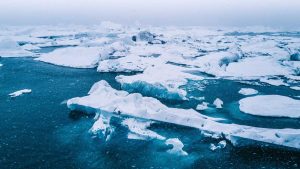
Computer models of the atmosphere and oceans are essential for understanding how the climate system behaves and how it is responding to climate change.
As part of CANARI, we will use a range of state-of-the-art models to understand how and why the North Atlantic – Arctic climate system is changing, and to better predict how it will change in the coming decades. These changes will have knock-on effects for extreme weather in the UK.
CANARI will produce a set of new ground-breaking community simulations, ranging from global coupled climate simulations to very high resolution regional atmosphere and ocean simulations. These will be designed to resolve the most challenging physical processes that impact the UK. The simulations will be available for the wider academic community to utilise and include:
- The UK’s first large ensemble with the Met Office’s N216 ORCA025 coupled model. A large ensemble is a set of climate simulations designed to sample the possible range of natural variability that can occur over coming decades, together with the forced climate change response. This will allow us to understand how the large-scale atmospheric and oceanic circulation in the North Atlantic region will change, the key drivers of the change, and to extract the signal of climate change relative to natural variability.
- A set of convection-permitting atmosphere-only case study simulations over a large European domain, to probe the dynamics of the most extreme high-impact windstorms and flooding events impacting the UK under present day and future climate conditions.
- A new Arctic-North Atlantic tidally active ocean-sea ice model (1/12°) to investigate how a changing Arctic-North Atlantic Ocean system might impact ocean circulation, with present and future climate simulations.
- Downscaled simulations from the Arctic-North Atlantic configuration with the 1.5km resolution (AMM15) shelf sea model to investigate the impact of changes in ocean circulation, shelf edge processes, wind and terrestrial riverine forcing on the shelf seas around the UK.
- A new Arctic simulation targeted at enabling improved representation of eddies, narrow boundary currents and associated transports. These improvements will be achieved through finescale resolution (1/36°) and implementation of a new mixing parameterisation and sea-ice model enhancements.
Related News

December 05, 2025
Review of the climate change impacts on ocean circulation relevant to the UK and Ireland
CANARI researchers contributed to a review of the latest research on the Atlantic Meridional Overturning Circulation (AMOC)…
December 04, 2025
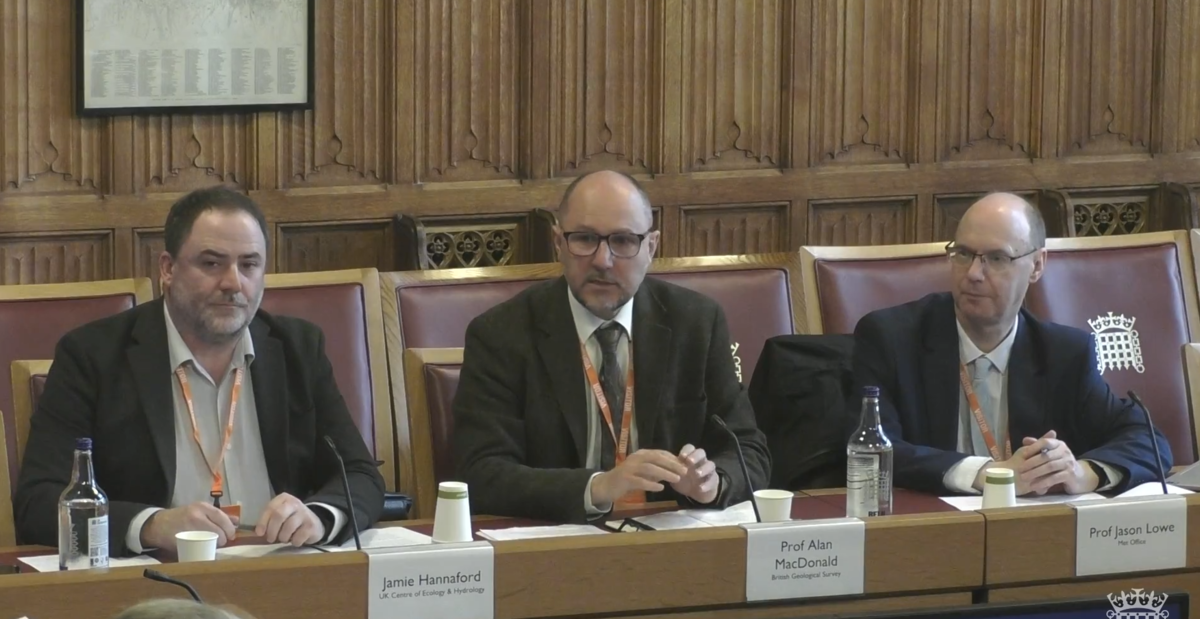
CANARI researchers inform parliamentary inquiry on drought preparedness
CANARI researcher provides evidence to the House of Lords Environment and Climate Change Committee …
December 03, 2025
CANARI’s Role in Understanding Arctic Climate Risks
Melting ice opens new trade opportunities, but it also heightens environmental and safety risks, including the potential for severe storms….